
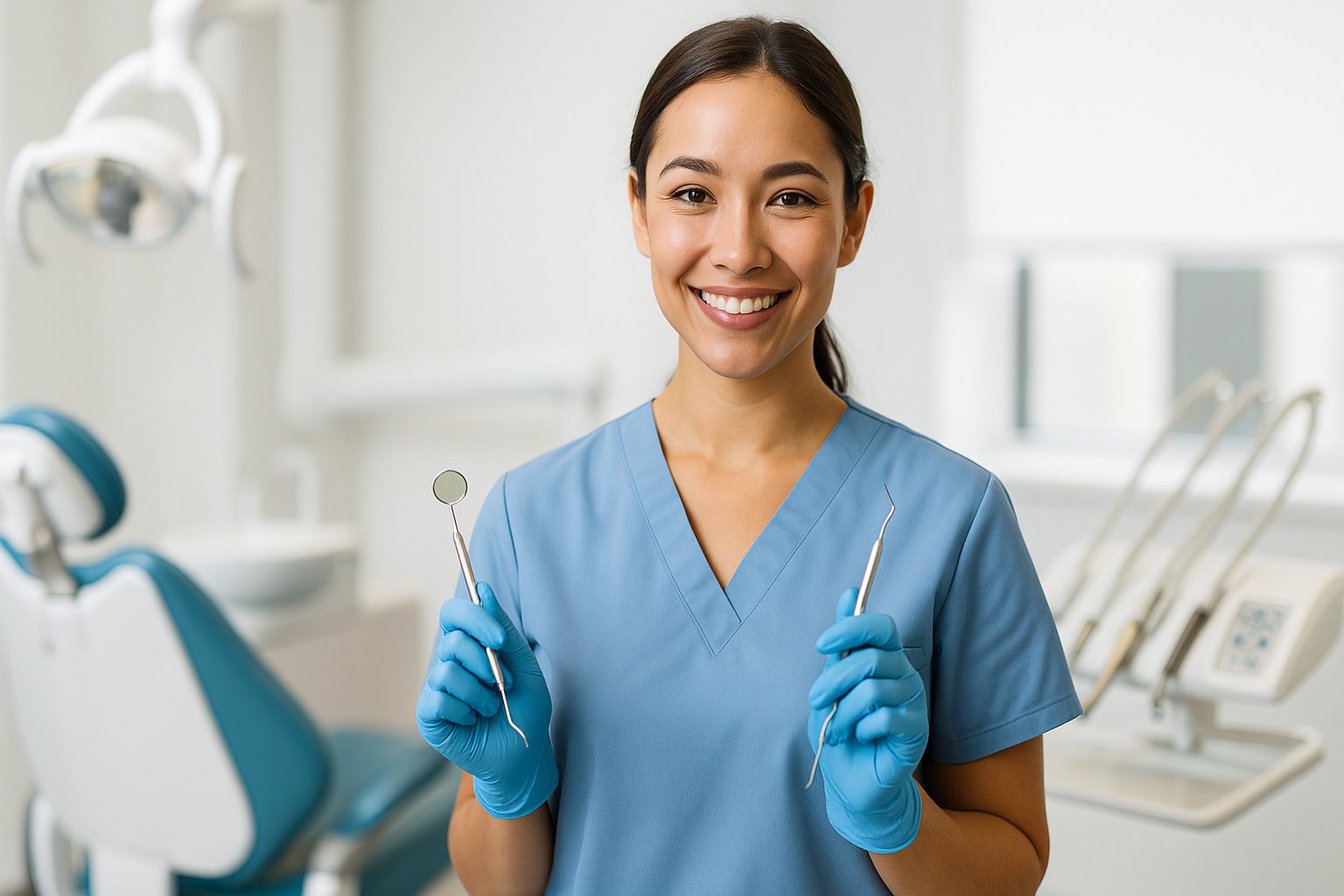
Thinking about becoming a dental assistant? You've chosen a growing field with strong job security and meaningful patient interaction. But here's what most people don't realize: technical knowledge alone won't make you stand out. The best dental assistants combine clinical expertise with people skills, organization, and adaptability.
Whether you're researching training programs or already enrolled, understanding what employers value most will help you focus your learning and stand out in the job market. Here are the 10 essential skills every successful dental assistant needs to master.
1. Clinical Proficiency and Chairside Assistance
Clinical skills form the foundation of dental assisting. You'll need to understand dental procedures, anticipate the dentist's needs, and execute tasks accurately under pressure.
What this looks like in practice:
- Preparing and organizing instruments before procedures
- Handing the right tools to the dentist at the right moment
- Taking dental X-rays with precision and safety
- Operating suction equipment to keep the work area clear
- Mixing dental materials to exact specifications
Modern practices increasingly use digital systems, including digital radiography, CAD/CAM technology, and intraoral cameras. Programs like National Career College's Dental Assistant Program integrate these technologies into training so you're ready for real-world practice from day one.
2. Infection Control and Safety Protocols
Patient safety isn't optional. Dental assistants are responsible for maintaining sterile environments and following strict protocols to prevent cross-contamination.
Key responsibilities include:
- Sterilizing instruments using proper techniques
- Following CDC and OSHA safety guidelines
- Using personal protective equipment correctly
- Safely disposing of biohazardous materials and sharps
- Conducting regular infection control audits
California employers expect dental assistants to know these protocols inside and out. NCC's program includes Dental Board of California approved Infection Control certification, preparing you for what employers require.
3. Patient Communication and Interpersonal Skills
More than one-third of Americans experience dental anxiety. Your ability to put patients at ease directly impacts their experience and whether they return for future care.
Effective communication means:
- Greeting patients warmly and building rapport quickly
- Explaining procedures in clear, non-technical language
- Listening actively to patient concerns and questions
- Reading body language to identify nervousness or discomfort
- Providing reassurance before, during, and after procedures
Strong people skills extend beyond patients. You'll also work closely with dentists, hygienists, and front office staff. Practices run smoothly when the entire team communicates effectively.
4. Organization and Time Management
Dental offices operate on tight schedules. One delayed procedure can throw off the entire day. Organized dental assistants keep everything running efficiently.
Critical organizational skills:
- Maintaining accurate, detailed patient records
- Managing appointment schedules and patient flow
- Keeping a proper inventory of supplies and materials
- Preparing treatment rooms with the correct instruments
- Coordinating between multiple providers when needed
Employers consistently rank organization among their top hiring criteria. If you can juggle multiple tasks while maintaining attention to detail, you'll become indispensable.
5. Manual Dexterity and Precision
Dental work happens in a small space with precise instruments. You'll need steady hands, excellent hand-eye coordination, and fine motor skills.
Dexterity requirements:
- Using small instruments accurately in tight spaces
- Mixing materials to exact consistency
- Taking impressions without errors
- Assisting with procedures requiring controlled, steady movements
- Performing tasks that demand fine motor control
The good news? These skills improve dramatically with practice. Quality training programs provide extensive hands-on lab time where you can develop these abilities in a supervised setting before working with actual patients.
6. Digital and Technology Skills
Gone are the days of paper charts and film X-rays. Today's dental offices run on technology, and you'll need to be comfortable using it.
Essential tech competencies:
- Electronic health record (EHR) systems like Dentrix, Eaglesoft, or Open Dental
- Digital radiography and imaging software
- Practice management systems for scheduling and billing
- Intraoral cameras and digital scanners
- Basic computer skills, including typing and data entry
Many practices expect dental assistants to troubleshoot basic technology issues and train new hires on digital systems. Being tech-savvy makes you more valuable to employers.
7. Attention to Detail
Small mistakes in dentistry can lead to big problems. Detail-oriented dental assistants catch issues before they become complications.
Where precision matters:
- Verifying patient information and medical histories
- Documenting procedures completely and accurately
- Following sterilization protocols exactly
- Identifying changes in patient comfort or condition
- Maintaining accurate inventory and supply records
- Properly labeling specimens and materials
This skill also means noticing when patients are nervous, uncomfortable, or in pain and responding appropriately. Vigilance protects both patients and the practice.
8. Professional Demeanor and Reliability
Your professionalism reflects on the entire practice. Patients judge the office partly by how you present yourself and interact with them.
Professional attributes employers value:
- Consistent punctuality and dependable attendance
- Appropriate appearance and hygiene standards
- Maintaining strict patient confidentiality
- Positive attitude, even during stressful situations
- Taking initiative and accountability for your work
- Commitment to continuous learning and improvement
Reliability is especially critical in dental practices. When a team member doesn't show up, it disrupts the schedule, impacts patient care, and creates stress for everyone else.
9. Adaptability and Problem-Solving
No two days in a dental office are the same. Equipment breaks, emergencies arise, and schedules change. You'll need to think quickly and adapt on the fly.
Adaptability in action:
- Adjusting smoothly to last-minute schedule changes
- Learning new procedures and technologies as they're introduced
- Handling emergency situations calmly and effectively
- Finding solutions when materials or equipment aren't available
- Accommodating different patient needs and preferences
The healthcare field evolves constantly. Dental assistants who embrace change and tackle challenges positively become the ones practices can't operate without.
10. Empathy and Compassionate Care
Behind every procedure is a person who may be anxious, scared, or in pain. Compassionate care separates adequate dental assisting from exceptional patient service.
Demonstrating empathy:
- Recognizing and validating patient emotions
- Providing emotional support during stressful procedures
- Taking extra time with anxious patients
- Anticipating needs before patients express them
- Following up after complex or difficult procedures
- Creating a welcoming, judgment-free atmosphere
Empathetic dental assistants build patient loyalty and generate positive reviews. In today's online world, your compassionate approach becomes a competitive advantage for the practice.
Develop These Skills at National Career College
These ten skills create the foundation for a successful, rewarding dental assisting career. But knowing what skills you need is just the first step. You need quality training that develops these competencies through a combination of classroom learning, hands-on practice, and real-world experience.
That's where National Career College comes in.
Why Choose NCC's Dental Assistant Program?
- Comprehensive, Job-Focused Training: Our program covers all the clinical and interpersonal skills employers are looking for. You'll gain hands-on experience in our state-of-the-art labs before your clinical externship, building confidence and competence. You're not just learning theory; you're developing practical skills you'll use every day.
- California-Specific Certifications Included: NCC's program includes Radiation Safety, Infection Control, and Coronal Polishing certifications approved by the Dental Board of California. These credentials are what California employers expect and often lead to higher starting salaries. You'll graduate with the certifications needed to stand out in the job market.
- Real-World Clinical Experience: You'll complete clinical externships at dental practices throughout the Los Angeles area, working alongside experienced professionals and applying your skills with actual patients. This real-world experience is invaluable when you start your job search. Many of our students receive job offers from their externship sites.
Ready to Start Your Dental Assisting Career?
The demand for skilled dental assistants in California isn't slowing down. With the right training and these essential skills, you can build a stable, rewarding career helping patients achieve better oral health.
Don't just learn about dental assisting. Experience it with hands-on training, real clinical hours, California-approved certifications, and support from enrollment through employment.
Your future in dental assisting starts here.
Take the next step:
Learn More About NCC's Dental Assistant Program
Request Information | Schedule a Campus Tour | Apply Now
Related: Curious about earning potential? Read our guide on dental assistant salary in California to understand what you can expect to earn.
