
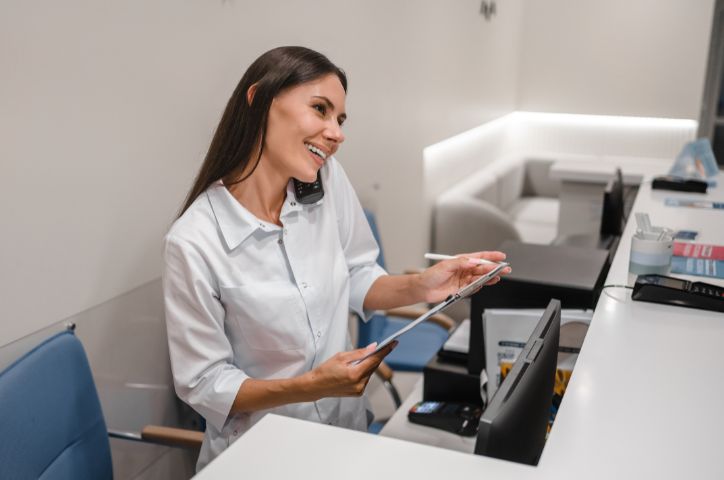
If you've ever called a doctor's office to make an appointment, you've already interacted with a medical scheduler. They're the person who figured out where you'd fit in a packed schedule, confirmed your insurance, and made sure you got a reminder before your visit. Easy enough from your end. Behind the scenes, it's a different story.
Medical schedulers keep healthcare offices moving. Without them, the whole system backs up fast. It's a role that doesn't get as much attention as it deserves, and that's actually good news if you're looking for a career with consistent demand and a clear path forward.
This guide covers what medical schedulers actually do, how to become one, what skills the job requires, and what you can expect in terms of salary and growth, especially here in California.
What Is A Medical Scheduler?
A medical scheduler, sometimes called a patient scheduler or appointment coordinator, manages the flow of patients and appointments at a healthcare facility. They work in hospitals, private practices, specialty clinics, outpatient centers, and more.
The role looks simple from the outside. It isn't. A medical scheduler is constantly balancing multiple providers' calendars, handling last-minute cancellations, verifying insurance eligibility, following up with patients, and making sure no one falls through the cracks. They're often the first voice a patient hears when they contact a facility, which means they're setting the tone for that patient's entire experience.
It's a front-line role with real responsibility. And because healthcare offices never stop needing patients scheduled, it's also one of the more stable entry points into the field.
How To Become A Medical Scheduler: Step-by-Step
Becoming a medical scheduler is a straightforward process, but each step builds on the last. You don’t need years of training to get started, but you do need the right mix of education, practical experience, and technical skills. Below is a step-by-step path that shows how to move from entry-level to job-ready in this field.
Step 1: Complete Your Education
Most employers require at least a high school diploma or GED to get started. But in a competitive market like California, finishing a formal training program gives you a real edge.
Programs in medical office administration, medical billing and coding, or healthcare administration cover the terminology, software, and compliance knowledge that employers actually want.
National Career College's Medical Office Specialist program is built for exactly this. In about eight months, you'll cover medical terminology, scheduling systems, EHR software, HIPAA compliance, and office procedures. You'll also get externship experience in a real healthcare setting before you graduate, which is often what separates candidates who get callbacks from those who don't.
Step 2: Gain Relevant Experience
If you're still in school, start early. Look for part-time work or volunteer opportunities at clinics, hospitals, or community health centers. Even roles that aren't strictly scheduling, like front desk reception, customer service, or data entry, build transferable skills that translate well into healthcare scheduling.
Once you graduate, entry-level titles to look for include patient scheduler, appointment coordinator, front desk receptionist, and patient access representative. These roles put you in direct contact with the systems and workflows you'll use throughout your career.
Step 3: Develop Technical Skills
Medical schedulers work with a lot of technology. Getting comfortable with it early makes a real difference. Focus on EHR platforms like Epic, Cerner, or Athenahealth. Practice navigating scheduling software and insurance verification portals. Get sharp with basic office applications like Microsoft Office or Google Workspace. Telehealth has also added a new layer, so familiarity with virtual appointment platforms is increasingly useful.
The faster you get up to speed on the tools, the faster you contribute from day one.
Step 4: Obtain Certification (Optional But Recommended)
California doesn't require a license to work as a medical scheduler. But certifications can help you stand out, especially in larger markets.
Credentials like the Certified Medical Administrative Assistant (CMAA) from the National Health career Association verify your knowledge of scheduling, patient intake, insurance processing, and HIPAA compliance. Even if a posting doesn't require it, having one shows initiative. Employers notice.
Step 5: Build Your Resume and Apply
Your resume should highlight any relevant training, software proficiency, certifications, and any experience dealing with scheduling, customer service, or administrative tasks. If your program included an externship, treat it like a real job and describe what you actually did.
Tailor your resume to each job posting. Schedulers work across very different settings, and a large hospital system is looking for different things than a small specialty clinic. Show that you understand the difference.
Step 6: Prepare For Interviews
Expect behavioral questions. Interviewers want to know how you handle a double-booked calendar, a frustrated patient, or a provider who just canceled three appointments. Come with specific examples, even if they're from training or volunteer experience.
Know the basics of HIPAA. Be ready to talk about EHR systems you've used. And show that you can stay calm when things get complicated, because in scheduling, they always do.
Essential Skills For Medical Schedulers
Communication Skills
Medical schedulers are often the first and last voice a patient hears. Clear, empathetic communication isn't optional. You're explaining appointment details, collecting sensitive information, delivering news patients don't always want to hear, and doing all of it while managing a full queue. The ability to stay professional and warm under pressure is what separates good schedulers from great ones.
Written communication matters too. Schedulers send appointment confirmations, insurance requests, and follow-up messages constantly. Being clear and concise in writing, not just on the phone, is part of the job.
Organizational And Time Management Skills
A scheduler's job is essentially organized chaos. Multiple providers, overlapping appointment types, no-show management, follow-up calls, and insurance pre-authorizations. Keeping all of it straight without letting anything slip requires genuine organizational discipline.
Last-minute changes are a daily reality. A provider cancels. An urgent patient needs to be worked in. A double booking surfaces at 8 AM. Your ability to pivot quickly and rearrange the pieces without losing track of everything else is one of the most valuable things you bring to the role. If you're the kind of person who thrives on structure and problem-solving, scheduling is a great fit.
Technical Proficiency
EHR systems, scheduling software, insurance portals, and telehealth platforms are the daily tools of the job. You don't need to be an IT expert, but you do need to be comfortable learning new software quickly and troubleshooting basic issues on your own. Telehealth has added another layer to this, with schedulers increasingly expected to help patients navigate virtual appointment platforms alongside in-person ones.
Healthcare Knowledge
You don't need to be a clinician. But knowing medical terminology, understanding how insurance and referral processes work, and having a basic grasp of HIPAA go a long way. It makes you faster, more accurate, and more useful to the clinical team around you. Schedulers who understand the difference between a new patient visit and a follow-up, or who know what pre-authorization means, are considerably more valuable than those who don't.
Where Medical Schedulers Work
Medical schedulers are needed anywhere patients need appointments, which is basically everywhere:
- Hospitals and health systems
- Private physician practices
- Specialty clinics (cardiology, orthopedics, dermatology, etc.)
- Outpatient surgery centers
- Community health centers and urgent care facilities
- Telehealth companies
Each setting comes with its own pace and complexity. A scheduler at a busy hospital system might manage dozens of providers across multiple departments. One at a small private practice might handle everything from phones to insurance verification to patient follow-up. Both are valuable, and both give you experience that transfers.
In California, the demand is especially consistent. The state's large and diverse population means healthcare facilities are always operating at high volume, and skilled schedulers are always needed to keep up. Whether you want to work in a large urban health system in Los Angeles or a community clinic in a smaller market, the opportunities are there.
Salary Expectations And Career Growth
According to the U.S. Bureau of Labor Statistics, the closest BLS category to medical scheduler is medical secretaries and administrative assistants. The national median wage for this group was $40,640 in May 2024. California consistently pays above the national average, with the state's healthcare minimum wage floor set at $21 per hour as of October 2024, with planned increases going forward.
Pay depends on setting, experience, and location. Schedulers in large hospital systems or high-volume specialty practices tend to earn more than those in smaller offices. Certifications and EHR expertise can also bump your rate.
Career growth from scheduling is real. Many medical schedulers move into lead scheduling roles, office management, healthcare administration, or billing and coding, especially when they continue their education. It's a solid entry point with multiple directions forward.
Why Choose A Medical Scheduling Career?
Medical scheduling is one of the more accessible entry points into healthcare. You don't need years of clinical training. You don't need a bachelor's degree to get started. What you need is the right foundational training, a set of sharp organizational and communication skills, and the ability to stay calm when five things happen at once.
It's also a role that puts you at the center of the patient experience without putting you in a clinical setting. You're the person who gets a nervous patient in quickly, who catches the scheduling conflict before it becomes a problem, and who makes sure nothing falls through the cracks. That kind of behind-the-scenes impact adds up.
For people who like working with the public, staying organized, and being part of something that actually matters, it's a genuinely good fit. And in California, where the healthcare industry isn't going anywhere, it's a fit that comes with real job security and a clear path to grow.
Launch Your Medical Scheduling Career Today
The demand for skilled medical schedulers in California isn't slowing down. If you're ready to start building toward this career, the first step is getting the right training.
National Career College's Medical Office Specialist program gives you the scheduling knowledge, EHR training, HIPAA compliance background, and externship experience to be ready from day one. Request more information today and find out if it's the right fit for you.